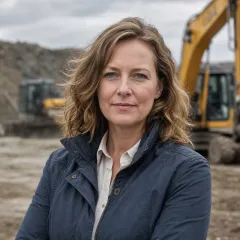
Look, I'm gonna be honest with you. When I took over purchasing for our company in 2022, I thought I had it all figured out. My job was simple: find the cheapest machine that meets the spec, get three quotes, and buy it. Right?
Wrong. So very wrong. My first major equipment purchase—a skid steer for our new landscaping division—almost got me a one-way ticket out the door. The machine itself was fine, on paper. But the process? A nightmare. The 'cheaper' vendor couldn't provide a proper invoice (handwritten only—finance nearly had a heart attack), delivery was two weeks late, and when it broke down three months in, their '24/7 support' turned out to be an answering machine. I had to explain to my VP why a $40,000 asset was idle for a week. That's the kind of thing that gets you put on a performance plan.
Here's the thing: I'm an admin buyer. I manage roughly $250,000 annually across 8 different vendors for everything from office supplies to heavy machinery. I'm not a fleet manager. I'm the person who has to make sure the parts fit, the invoices are clean, and the operators aren't yelling at me. And in this job, the single biggest headache isn't a high price—it's a broken promise.
The Surface Problem: More Brands Than I Can Count
My first instinct was to assume the problem was choice overload. When you Google 'construction equipment,' you get flooded: Caterpillar, Komatsu, JCB, Volvo, Hyundai, plus a dozen used dealers. It's overwhelming. My conventional wisdom was that a machine is just a machine—steel, hydraulics, an engine. The lowest upfront cost was the safest bet for my budget.
That skid steer debacle taught me everything I'd read about commodity buying was wrong for heavy equipment. It's not a commodity. The cost of a breakdown—the lost labor, the angry site manager, the rental fees to cover the gap—dwarfed the initial savings.
The Deeper Problem: The Vendor's Support DNA
The real issue wasn't the machine. It was my vendor selection methodology. I was treating it like buying a printer. I had a spec, I found a price, and I clicked 'buy.' But an excavator or a forklift isn't a printer. It's a long-term relationship that lives or dies on three things:
- Inventory & Parts Availability: Can they get me a replacement hydraulic filter in 24 hours, or will my machine sit for a week?
- Service Network: Do they have a certified technician within 50 miles, or am I paying for a mobile mechanic from three states over?
- Response Time: When I call with a problem, do I get a human who knows my account, or an automated 'we'll get back to you'?
The budget vendor I chose was a shell. They could sell machines because they were cheap, but they had zero support infrastructure. They were a mailbox with a website. And when things went wrong—or rather, when things went wrong and I needed help—I was completely alone.
The Real Price of the 'Cheaper' Option
Let's quantify the damage from that first purchase, because numbers don't lie.
The skid steer cost: $38,000 vs. a quote from a Hyundai dealer for $42,500. I saved $4,500 upfront. Felt like a hero to my boss. Then:
- Invoicing error: The handwritten receipt couldn't be coded. Accounting spent 3 hours fixing it. At our internal billing rate, that's about $150 in lost time.
- Delivery delay (2 weeks): I had to rent a comparable unit for two weeks. That was $1,800.
- Breakdown (Week 12): A faulty alternator. The dealer couldn't get a part for 10 days. The machine was down for 8 of those 10 days (waiting for the part plus the mechanic's schedule). Rental cost for 8 days? Another $2,400.
- Repair cost: $1,200 for the part and labor (not under warranty due to 'operation outside specified parameters'—a fancy way of saying they didn't want to pay).
Total additional costs: $1,800 (rental) + $2,400 (rental) + $1,200 (repair) + $150 (admin) = $5,550.
So my 'savings' of $4,500 turned into a net loss of $1,050, plus three weeks of productivity lost. And the cherry on top? I looked incompetent. The 'cheaper' option cost more in every way that mattered.
What Changed My Mind: A Trigger Event
That was in March 2023. I swore I'd never make that mistake again. Our next major purchase was a compact wheel loader. I knew I needed a dealer with a real service network. I started talking to the Hyundai dealer who'd given me that $42,500 quote.
He didn't pressure me. He said, 'Before you buy, let me show you our parts warehouse and introduce you to our service manager.' That was the trigger event. He was selling me the system, not just the machine. He knew his machine was good—but more importantly, he knew that if his machine broke, I'd be okay.
That's when I realized the dichotomy we all face: You can buy a machine, or you can buy a solution. The machine is a price. The solution is a relationship.
The Hyundai Difference (From My Perspective)
I'm not here to say Hyundai is the only game in town. For my context—a mid-size company with a mix of new and used equipment, a need for both standard and electric models, and a budget that requires careful justification—their dealer network philosophy has been a perfect fit.
Here's what I've found working with them for the last two years:
- Parts Availability: As of January 2025, they stock critical parts for models going back 10 years. I can get a brake pad for a 2016 forklift shipped overnight. That's huge.
- Service Technicians: Their local techs are certified. They show up on time. They explain what they did. This makes my life easier.
- Evolving Product Line: They're investing heavily in electric/hybrid solutions. We're planning a shift to electric forklifts for our warehouse in 2026, and having a dealer partner who can guide that transition is invaluable. It's not just about the machine; it's about the charging infrastructure and maintenance training.
A Caution on Time and Context: I'm speaking from my experience between 2022 and 2025. My needs are for smaller, more nimble operations. I'm not a mining company. I'm buying equipment that needs to work 8-12 hours a day, not 24/7. Things change fast in this industry. New models come out, supply chains shift, and dealer service levels can vary. This worked for us. Your mileage may vary if you're a massive fleet operator with different scale.
The Bottom Line for Buyers Like Me
If you're an admin buyer, like me, tasked with sourcing construction equipment, forget trying to be a technical expert on every hinge nut and hydraulic pump. You don't need to know the difference between a telehandler and a backhoe’s fine print. You need to be a judge of support systems.
When you evaluate a potential supplier, especially for a major brand like Hyundai, don't just look at the spec sheet. Ask these three questions:
- What is your parts fill rate for a machine like this? (Ask for a number, not a vague promise.)
- Can I meet my local service manager before I sign the order? (The relationship with that person will make or break your sanity.)
- What's your standard invoicing process? (If they can't provide a clean, digital invoice with proper PO references, RUN.)
Small doesn't mean unimportant. A $40,000 order was a big deal for my company. It was a capital investment that needed to work. The vendors who treated that order with the same seriousness as a $400,000 order are the ones I still trust. Hyundai's dealer network got that from day one. They understood that proving their support infrastructure was the real value, not just the sticker price.
Per Industry Standards (as of February 2025): Most major OEMs, including Hyundai, publish service-level commitments in their dealer agreements. Look for their 'Critical Parts Availability' metric. Industry standard for 'green' status is usually >95% fill rate within 24 hours. A good dealer will share this data with you. If they won't, that's a red flag the size of an excavator bucket.