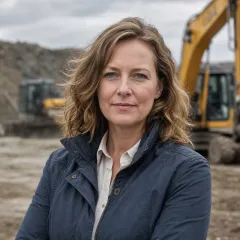
I don’t care how small your order is. If you’re buying one Hyundai skid steer or a single concrete mixer, it should get the same quality review as a fleet order. That’s not a nice-to-have—it’s the whole point of working with a serious equipment brand.
As a quality and brand compliance manager at a Hyundai construction equipment dealer, I review every machine before it reaches a customer. Roughly 200 units a year. Over four years, that’s a lot of serial numbers, hydraulic diagrams, and service manuals. And in that time, I’ve rejected more than a few deliveries that were supposed to be “perfect.”
Maybe that sounds harsh. But here’s the thing I keep telling our sales team: an equipment purchase is a long-term decision. A small contractor buying one unit is not a smaller decision than a fleet buyer’s—it’s a bigger one. Because they can’t afford a mistake.
“You’re Too Small for Priority” Is a Red Flag
If you’re a small contractor, you’ve probably heard it: “we prioritize larger orders,” or “our minimum is higher.” I’ve done a few audits of vendor protocols across this industry, and I can tell you the issue isn’t size. It’s process.
What most people don’t realize is that “standard turnaround” often includes buffer time that dealers use to manage their production queue. It’s not necessarily how long your order takes. And “first quote” is almost never the final price for ongoing relationships. There’s usually room to negotiate once you’ve proven you’re a reliable customer. But none of that should depend on whether you’re ordering one unit or ten.
In Q1 2024, I ran a quality audit on our own outbound process. We found that about 6% of first delivery documents had mismatched serial numbers—not a mechanical problem, but the kind of paperwork problem that causes delays at the gate. We fixed the protocol. That’s the kind of work that should happen for every order, regardless of line item count.
Before Hyundai Lease Offers, Understand the Spec
The first search I see from a lot of small buyers is “Hyundai lease offers.” I get it. Cash flow is real, and a monthly payment that starts low looks like a win. But I’d rather you start with the duty cycle.
Every machine has a design intent. A Hyundai compact excavator built for trenching is not the same machine as one configured for demolition. A forklift with a mast that’s too short for your racking will cost you more in lost time than any lease saving. The spec sheet is not a suggestion—it’s the contract between the machine and the job.
Take the Hyundai battery replacement question as an example. If you’re looking at an electric Hyundai forklift, the battery is the heart of the machine. Battery health can matter more than the paint finish. I’ve seen buyers compare lease offers and forget to ask about the battery’s remaining charge cycles. A battery replacement can cost thousands, and it isn’t always covered under the lease.
Trust me on this one: the monthly payment is the denominator, not the answer.
The Danger of Buying by Keyword: Bucket Truck, Skull Crusher, and Fall Zones
One of the best ways to spot an inexperienced buyer is the search terms—and I mean that in a good way. As of January 2025, a lot of people land on our site after searching “bucket truck” when they actually need a telehandler, or “skull crusher” when they’re trying to find a demolition attachment. These are not the same tool. And if you buy the tool before you buy the spec, you’ll pay for it later.
Here’s the distinction: a bucket truck is an aerial work platform. It puts a person in the air, not a pallet. If you need to move material to height, you need a telehandler or a forklift, not a bucket truck. Similarly, a skull crusher is a specialized attachment for crushing and breaking material. It only works if the host machine—whether a Hyundai excavator or skid steer—supplies the right hydraulic flow and pressure. The attachment doesn’t make the machine.
That’s why safety questions like “what is the fall zone for a forklift operation” are actually the right questions. The fall zone is the area around the mast and forks where a load could land if it slips or falls during lifting. On paper, it sounds simple. On a real site, it means the area directly under the load path and around the truck. No one should be standing there while the forks are raised. Ever.
The Counterargument: “Small Clients Can’t Be That Demanding”
To be fair, I get why some dealers focus on fleet buyers. Larger orders mean predictable volume and lower administrative cost. That’s real. But then again, every fleet buyer I know started with a single machine at some point. The buyers who got treated well when they were small are the ones who come back for the fleet.
I’ve seen it happen in our own customer base. A contractor who bought one Hyundai compact loader in 2022 now runs a fleet of six. But that happened because we took the first order seriously—not because we gave them a spreadsheet and a handshake. Small doesn’t mean unimportant. It means potential.
And let’s be honest: a small order often requires more care, not less. There’s no backup machine. If the unit arrives with a misspecified attachment or a missing safety label, the contractor’s job stops. That’s why I rejected a machine once because the lift capacity decal didn’t match the build sheet. It cost us a $22,000 redo and delayed a customer’s launch. The customer was a one-machine buyer. Do you think they cared about the size of their order? No. They cared that the machine was right.
Since we tightened the verification protocol in 2022, our outbound defect rate has dropped significantly. Customer satisfaction scores went up, and not just for big accounts. That’s not an accident.
Bottom Line: Buy the Spec, Not the Size
So here’s my opinion, and I’m not going to soften it: if a dealer treats you like a nuisance because you’re buying one unit, find a different dealer. A Hyundai machine is built to a standard. The inspection and support around it should be, too.
Start with the application. Research the duty cycle. Ask about Hyundai battery replacement if the machine is electric. Compare Hyundai lease offers only after you know the spec you need. Don’t let a “skull crusher” attachment or a bucket truck rental talk you into the wrong platform. And if you ever wonder “what is the fall zone for a forklift operation,” stop and get the safety answer before you get the keys.
I’d rather spend an afternoon under a single machine for a small buyer than sign off on ten units for a buyer who doesn’t care. Because a machine is more than a price tag. And the person who cares enough to ask questions is exactly the person who deserves a proper inspection.