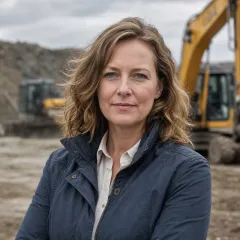
I run emergency fleet support for a Hyundai construction equipment dealer. In practice, that means I get the calls nobody wants to make: six o'clock on a Friday, a forklift down, material sitting on a dock, and a deadline that won't move. I've handled more than 300 rush requests in eight years, from a dead battery in a generator to a skid steer delivered 200 miles away in one day.
The person making that call is usually running a small contracting business. And underneath whatever piece of equipment failed, there's often another story nobody says out loud.
In March 2024, a general contractor called me on a Thursday night. He had 36 hours before a deadline and a $50,000 penalty clause if he missed it. He needed a forklift on site by morning. We sorted that out quickly. Then he added: "Truth is, none of my crew has ever driven one. They watched a video. Should be fine, right?"
Nobody searches “how to drive a forklift” at 10 a.m.
Look at the search terms that bring people to a dealer's website and you'll notice a pattern: “how to drive a forklift” is mostly searched after 10 p.m. It's not because people take night classes. It's because that's the moment they realize the machine is coming tomorrow and nobody on the crew is qualified to operate it.
When I'm triaging an after-hours call, I can hear the difference. The confident caller has an operator and needs a part. The anxious caller has a rental agreement and a hope. That anxiety is what the search box is really showing.
The short answer to their question? No, it's not fine. But not for the reason they expect.
Why “I'll figure it out tomorrow” is a dangerous plan
A forklift isn't a car. It steers from the rear wheels. The load sits in front of you. The capacity depends on the load center, the mast height, the attachment, and the data plate on the machine — none of which shows up in a five-minute video.
Here's a number that sticks with me: a typical 5,000-pound-capacity counterbalance forklift weighs about 9,000 pounds empty. With a load on the forks, it can weigh over 14,000 pounds. You can't stop that with a hand signal or a shout. You prevent the problem before it starts.
But the deeper issue isn't technique. It's the way small contractors are often treated by the rental and leasing industry.
The real problem isn't bad drivers. It's bad handoffs.
When I compared the accounts that never call me at midnight with the ones that do, the difference wasn't the age of the machine. It wasn't even the price they paid. It was whether anyone had taken responsibility for showing the operator how to run that specific unit safely.
A big fleet customer gets a dedicated rep, a service plan, and a training session when new equipment arrives. A small contractor often gets a key, a waiver to sign, and a wave from the lot. That's backwards in a lot of ways — small customers often pay more per machine than fleet accounts do, simply because they don't have negotiating power.
I'm not saying dealers are malicious. Most of this is legacy behavior. It comes from an era when only large companies leased forklifts and construction equipment, so systems were built around large accounts. Small contractors were an afterthought. That thinking is outdated, but it still shapes how a lot of equipment changes hands.
Honestly? It costs almost nothing to change. A ten-minute walkaround at delivery, a phone number to call, a straight answer about what the lease does and doesn't include. That's not a premium service. That's basic respect for the person signing the contract.
What it costs to “figure it out”
Let's get concrete. Last quarter alone, we processed 47 rush orders and hit a 95% on-time rate. The costs ranged from about $500 for an after-hours delivery to $15,000 for a same-week replacement on a remote site. Rush fees feel painful until you compare them to the alternative.
One customer paid $800 extra in rush freight to save a $12,000 project. That math works. The math that doesn't work is paying for an accident after an untrained operator meets a loading dock.
People think cheap rentals cause accidents. That's the wrong cause. The actual cause is that nobody was accountable after the machine was handed over. The operator didn't know what they didn't know, and no one was there to point it out.
What actually helps: lease support, not just a monthly rate
So when someone searches for “hyundai lease deals near me,” I want them to ask a different set of questions. Not just "what's the monthly payment," but "what happens after delivery?"
Look for a dealer that does at least three things. First, they walk your operator around the exact machine you're leasing. Second, they give you a direct line to someone who can answer questions before something breaks. Third, they don't disappear after the contract is signed.
Also be clear about what you're leasing. If you search for a Hyundai EV lease, you'll probably see passenger cars. But in the construction equipment world, EV means real electric machines: forklifts and compact equipment that run without diesel, with less noise and zero tailpipe emissions. If an electric forklift fits your building, ask the dealer how charging is handled and what runtime to expect with your load. A good dealer will know the details because they handle these machines every day.
And yes, we sell the fun stuff too. My parts counter carries Hyundai bucket hats, hoodies, and even a Hyundai 20-volt impact drill. I'm glad crews like the brand. But a hat won't stop a load from tipping. An impact drill won't replace a pre-shift inspection. The only attachment that really matters is the service plan — and whether the dealer treats your small order like a real customer.
Small contractors deserve the same standard
I've watched a contractor who rented a single machine for a weekend become a loyal buyer years later. I've also watched a disrespected small account take every future order somewhere else. The size of the first order tells you almost nothing about the size of the relationship.
That March contractor made his deadline. He also learned to ask for an operator plan before any machine shows up. Now, when I get a 10 p.m. call from him, it's because something genuinely broke — not because someone decided to learn a new skill overnight.
So if you catch yourself searching “how to drive a forklift” at night, stop and ask a better question: who's going to show up with the right machine and the right backup? And will they treat a small contractor like a customer worth keeping? That's the lease deal that actually matters.